Air Conditioner Guide6 min read•Published 2026-09-25

AC Not Cooling: Common Causes and What You Can Check

During scorching Gurgaon summers when temperatures routinely climb past 42°C, a cooling failure creates immediate discomfort. Before assuming the compressor has failed or refrigerant is empty, several straightforward mechanical and airflow issues can be safely inspected at home.

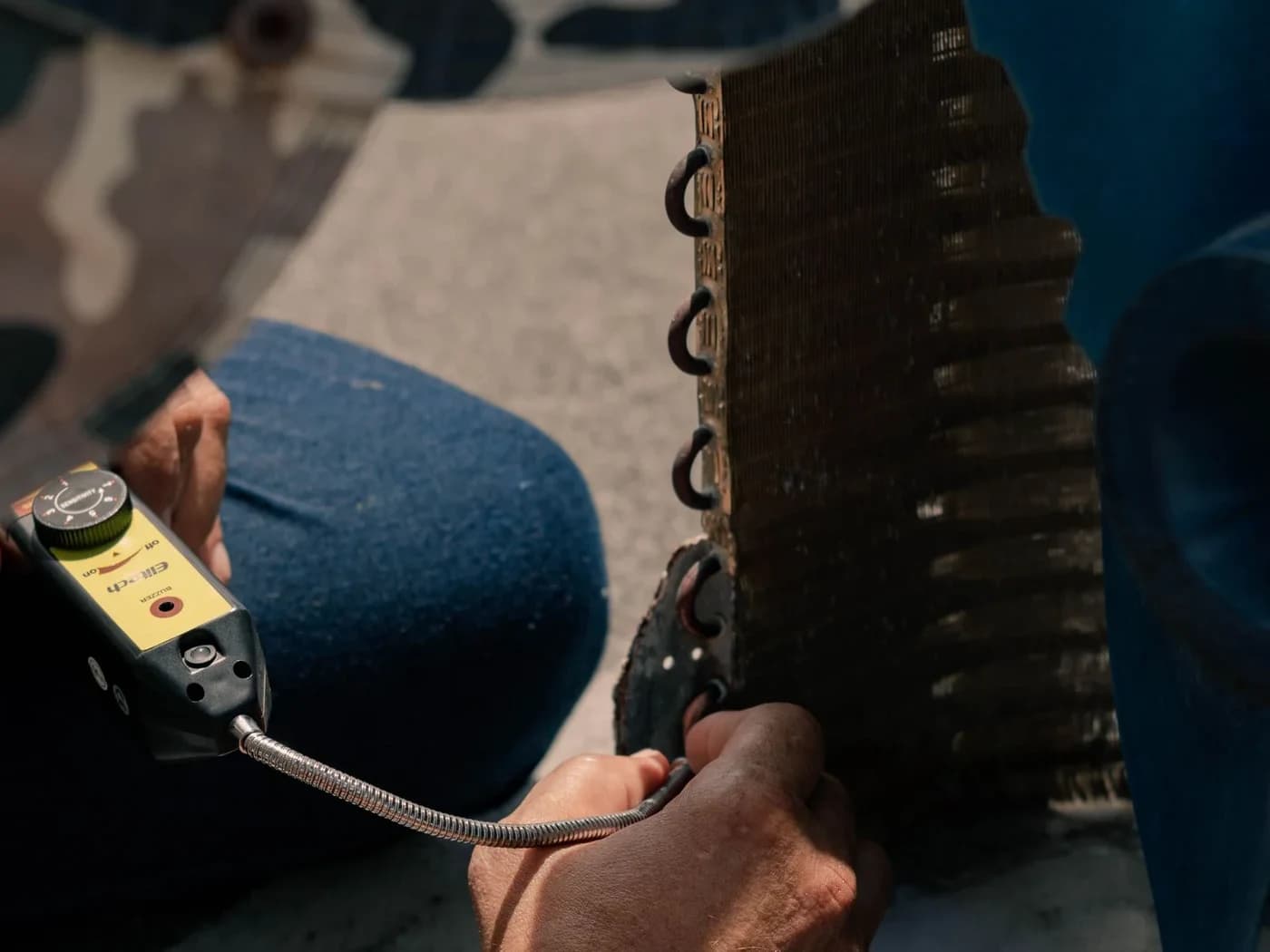
Technician checking refrigerant pressure and cooling coils of split AC

Why Does This Happen? Common Causes

Typical mechanical and environmental triggers

1

Choked Indoor Air Filters and Cooling Fins

When air filters accumulate a dense layer of dust, airflow across the evaporator coil drops drastically. Without sufficient warm room air moving across the cold coil, heat exchange stalls and ice may form across the fins, blocking cooling altogether.

Gurgaon Factor: Dry, dust-laden winds and high construction activity across New Gurgaon and Golf Course Extension frequently clog indoor mesh filters within 2 to 3 weeks of operation.
2

Outdoor Condenser Coil Dirt Blanket

The outdoor unit (ODU) dissipates the heat absorbed from your room into the outdoor air. If the thin aluminum fins of the condenser coil are blanketed with road dust or bird droppings, the AC cannot reject heat, causing the compressor to overheat and trip on thermal overload.

Gurgaon Factor: Outdoor units placed on balcony ledges or open terraces in Gurgaon suffer extreme ambient heat load, making unimpeded outdoor ventilation essential.
3

Refrigerant Micro-Leakage at Copper Flare Joints

Refrigerant gas (R32 or R410A) operates in a hermetically sealed loop and does not get consumed like fuel. If cooling steadily drops over days or weeks with thin ice appearing on the outdoor brass service valves, a pinhole leak exists at a brass flare nut or copper bend.

4

Weak or Defective Compressor Run Capacitor

The capacitor delivers the initial electrical phase boost required to run the compressor motor. When capacitors degrade due to high ambient temperatures and voltage swings, the outdoor fan will spin but the compressor fails to start, blowing plain room-temperature air indoors.

5

Incorrect Remote Controller Settings

Occasionally, remote controllers are accidentally switched to "Fan" mode, "Dry" mode, or set to an eco-temperature higher than current room temperature, preventing the outdoor compressor from kicking in.

Safe Checks a Homeowner Can Perform

Basic troubleshooting before requesting service

Check 1

Check Remote Mode & Temperature

Ensure your remote display shows the "Cool" mode icon (usually a snowflake symbol), not "Fan" or "Heat". Set the temperature to 24°C and wait 3 to 5 minutes for the outdoor startup timer delay to elapse.

Check 2

Slide Out and Wash Indoor Mesh Filters

Lift the front plastic panel of your indoor unit, slide out both nylon mesh filters, and rinse them under running tap water without detergent. Allow them to air-dry completely before snapping them back in.

Check 3

Inspect Outdoor Unit Clearance

Check your balcony or terrace outdoor unit. Ensure no cartons, drying racks, or bird netting are directly blocking the front fan exhaust or the rear coil intake.

Check 4

Verify the Main 16A MCB Circuit Breaker

Check your main electrical distribution board. Ensure the dedicated 16A or 20A AC circuit breaker has not partially tripped into a neutral position.

What You Should NOT Attempt Yourself

Safety warnings & high-risk DIY mistakes

⚠️ Never poke screwdrivers or pressure wash indoor electronic PCB compartments:Modern inverter AC indoor units house sensitive micro-controllers right above the blower wheel. Water ingress damages the main board instantly.
⚠️ Do not attempt DIY refrigerant topping without leak repair:Adding gas without identifying and brazing the copper leak point wastes money because the refrigerant escapes within days. Handling high-pressure R32 gas also carries severe frostbite and flammability risks.
⚠️ Do not touch outdoor electrical capacitors:Capacitors retain high-voltage DC charge even after the power switch is disconnected.

When Professional Inspection May Be Appropriate

  • The indoor unit blows air, but the outdoor compressor never turns on or makes loud clicking sounds.
  • Thin white ice or frost forms along the outdoor brass piping or the indoor cooling coil.
  • Airflow remains warm even after thoroughly cleaning both indoor filters and waiting 10 minutes.
  • The AC repeatedly trips the main room MCB immediately upon powering on.
Transparent Doorstep Inspection from ₹199

Need Help with Your Air Conditioner in Gurgaon?

Our local technician visits your residence across any sector of Gurgaon with multimeters, pressure gauges, and diagnostic tools. The ₹199 inspection fee is adjusted directly into your final bill upon repair approval.

WhatsApp CoordinatorCall +91 89508 56080
Explore full service details:AC Repair in Gurgaon Overview

Frequently Asked Questions

Why does my AC blow cold air for 5 minutes and then warm air?

This symptom usually points to compressor thermal tripping. Causes include a choked outdoor condenser coil, a failing run capacitor, or severe voltage drops preventing the compressor from maintaining operating RPM.

How often should AC filters be cleaned in Gurgaon?

Due to local dust levels, residential air filters should be rinsed every 15 to 20 days during peak summer, and a professional coil deep-cleaning should be performed before the cooling season starts.

Is it safe to run an AC that is not cooling?

No. Running an AC with a low refrigerant charge or failing capacitor can cause the compressor motor windings to overheat, turning a minor repair into an expensive compressor replacement.

Related Troubleshooting Guides

More problem-solving articles for your home

All Resources
Technician checking water drain line and condensate tray on split AC
Air Conditioner
5 min read•Published 2026-09-25

AC Water Leakage: Common Causes & What to Do Immediately

Water dripping down your bedroom wall from the indoor split AC unit is one of the most frustrating domestic emergencies during humid monsoon and summer months. Understanding why condensate overflows helps you take immediate protective action before calling a technician.

Technician inspecting blower fan wheel and motor bearings inside split AC
Air Conditioner
5 min read•Published 2026-09-25

AC Making Noise: Common Sounds & What They Mean

Air conditioners produce a steady, quiet rush of air during normal operation. When that gentle whoosh turns into sharp clicking, rhythmic rattling, or a loud vibrating hum, it usually signals a mechanical misalignment or worn bearing that needs timely attention.